4 Ready Templates to Send in Seconds for League Emergency Alerts
4 Ready Templates to Send in Seconds for League Emergency Alerts
An effective emergency alert gives one immediate, authoritative instruction (shelter, evacuate, or pause play) tied to a specific venue plan and issued by a named decision-maker. It travels through several channels at once: text message, on-site voice or PA, email, and social media, so no parent, coach, or volunteer is left guessing. The rest of this guide shows how to build that system before you ever need it.
TL;DR:
- The decision-maker responsible for alerts must have unchallengeable authority and rely on objective triggers such as lightning detection or facility hazards.
- Venue-specific emergency plans should include clear shelter locations, EMS contacts, AED placements, and pre-established roles, all posted visibly at the site.
- Multi-channel notification methods, including SMS, PA, email, and social media, should be used simultaneously with escalation steps if recipients do not respond promptly.
- Regular testing through daily checks, quarterly drills, and annual full simulations with EMS enhances alert system reliability and preparedness.
- Pre-written message templates and a centralized platform like SportChatPro streamline rapid, prioritized alerts referencing venue details and maintaining current contact lists.
Table of Contents
- What an emergency alert system must cover
- Embed alerts in venue-specific emergency action plans
- Message templates and channel strategy
- Operational checklist: before, during, and after
- Testing, drills, and maintenance for reliable alerts
- Safety thresholds and resuming play
- How SportChatPro supports effective emergency alerts
- A league admin’s take on what actually matters
- Get your league’s alerts and EAP data in one place
- FAQ
- Sources
What an emergency alert system must cover
A usable alert system starts with clear triggers and clear ownership. Triggers typically fall into five categories: severe weather (especially lightning), a medical collapse, heat-related illness, a facility hazard such as a damaged structure or chemical spill, and security incidents like an intruder or altercation.
Two roles matter most. The Authorized Decision-Maker holds unchallengeable authority to suspend or cancel an event, a responsibility NFHS guidelines tie directly to having objective trigger points rather than judgment calls made under pressure. A Weather Safety Official monitors conditions and feeds that decision-maker real-time information; the two roles can overlap in a small league but someone has to own each function.
The objective of every alert is the same regardless of trigger: get people to immediate safe action, activate EMS when needed, and give coaches, volunteers, and parents instructions they can follow without a follow-up phone call.
Embed alerts in venue-specific emergency action plans
A generic “shelter in place” message is nearly useless if nobody knows where the shelter is. Alerts only work when they point back to a venue-specific Emergency Action Plan (EAP), because evacuation routes, shelter locations, and AED placement differ from field to field, even within the same league.
The NATA guidance on EAP development lists the minimum components every plan needs: EMS contact numbers, a venue map or GPS coordinates for the exact shelter or meeting point, the location of emergency equipment including AEDs, a breakdown of who does what during an incident, and a documentation template to capture what happened afterward.

An AHSAA venue plan template is a practical starting point: it spells out chain-of-command language and EMS protocol so a volunteer under stress can follow printed steps instead of improvising. Pair the written plan with a pre-event medical meeting, a short briefing before competition where coaches and officials confirm who activates the plan, and a daily readiness check of AEDs and communication equipment. Without that step, an EAP is a document nobody has actually read.
Message templates and channel strategy
When an incident starts, nobody should be composing a message from scratch. Pre-written templates with fill-in slots let a decision-maker send an alert in seconds.
- Evacuate: “Leave [field/court] now. Go to [meet point/address]. Do not return until told by [decision-maker name].”
- Shelter: “Lightning detected. Move indoors to [shelter name, building, entrance] immediately. Play paused until further notice.”
- Medical emergency: “Medical emergency at [field/court]. EMS contacted. Please clear the area and await instructions from on-site staff.”
- Game canceled: “Today’s game at [venue] is canceled due to [reason]. Check [email/app] for reschedule details.”
Channel sequencing matters as much as wording. CISA’s lightning safety guide recommends using multiple notification methods together rather than relying on one, because any single channel can fail or go unnoticed. Send immediate SMS and trigger on-site voice or PA at the same time, since people already at the venue need instructions before anyone checks a phone. Follow within minutes with an email that restates the instruction, then a social post for anyone not on-site. Build in an escalation step: if a parent hasn’t opened the text within a set window, a phone call or second channel should fire automatically.
Prioritize who sees the message first. On-site staff and coaches need it instantly, since they’re the ones physically moving people to safety. Parents and guardians come next, followed by a broader notice to the rest of the league if the incident affects multiple games or facilities.

Operational checklist: before, during, and after
Preparation determines whether an alert actually gets followed. Break the work into three phases.
Before:
- Post the EAP at the venue entrance and team areas.
- Verify AED placement and battery status.
- Update contact lists for coaches, officials, and parents.
- Hold a pre-event medical meeting to confirm roles.
During:
- Confirm the trigger meets the threshold before acting.
- Activate the alert through all channels at once.
- Call 911 immediately for any medical emergency.
- Direct on-site staff to the shelter or evacuation point named in the EAP.
- Guide EMS to the venue entrance and the exact location.
After:
- Log the incident: time, trigger, actions taken, and outcome.
- Send a follow-up notification confirming the situation is resolved.
- Handle rescheduling or refunds as needed.
- Run an after-action review with staff involved.
Pro Tip: Keep a laminated copy of the EAP and alert templates in every coach’s equipment bag, not just in a shared folder nobody opens during a storm.
Testing, drills, and maintenance for reliable alerts
An alert system that’s never been tested will fail at the worst possible time. Build a simple maintenance rhythm around it.
- Run daily readiness checks on radios, phones, and AED status before the first game of the day.
- Schedule quarterly simulated alerts across every channel to confirm delivery actually works, not just that the message sends.
- Hold an annual full EAP drill, ideally with local EMS, so responders know the venue before a real call.
A multi-channel alert sent through text, voice, and email at once gives you a built-in backup if any single channel fails or is delayed, which is the core reasoning behind CISA’s recommendation to never rely on one method alone. Assign a specific person to own each test and record the results; a league that can show documented drills has an easier time demonstrating compliance and improving weak points year over year.
Safety thresholds and resuming play
Alerts are only as good as the thresholds behind them. For lightning, the standard baseline from NOAA is to suspend play the moment thunder is heard or lightning is detected within about six miles, then wait 30 minutes after the last thunder or flash before resuming. Check your national governing body’s own policy too, since some add stricter local requirements.
Heat is a separate threshold. Monitor the heat index throughout practices and games and have a plan to modify or cancel activity before anyone shows signs of exertional heat illness; a hydration break schedule written into the EAP removes the guesswork.
For sudden cardiac events, NATA’s guidance points to a 1 to 3 minute target between collapse and AED application as the window that gives the best chance of survival, which is why AED location is recommended to be included in every alert message to improve emergency response effectiveness.
How SportChatPro supports effective emergency alerts
We built SportChatPro around the reality that an emergency alert is only as fast as the system behind it. Because scheduling, rosters, and communication live in one connected platform, we keep centralized contact lists current automatically rather than relying on manual updates.
We store venue maps and facility details alongside the schedule, so alerts can reference shelter, entrance, or AED locations linked to each field instead of generic instructions. We also support prioritized messaging, sending to on-site staff and coaches first, then parents, through pre-saved templates that administrators can send quickly instead of typing a message during an incident.
That same connected structure carries over season to season: contact lists, venue details, and templates are maintained rather than rebuilt each year, helping with continuity.
A league admin’s take on what actually matters
Most leagues don’t fail at emergency response because they lack a plan. They fail because the plan sits in a binder nobody has opened since preseason. If you do nothing else this year, do three things: name your decision-maker out loud to your staff, write your four core alert templates now while you’re calm, and run one drill before opening day. Perfect documentation matters less than a volunteer who actually knows what to do in the first sixty seconds.
— Cameron
Get your league’s alerts and EAP data in one place
Everything in this playbook works better when the templates, contact lists, and venue details live in the same system you already use to run your season. We built SportChatPro so an administrator can send a prioritized alert, reference a venue’s EAP details, and keep every contact list current without juggling separate tools during an incident.
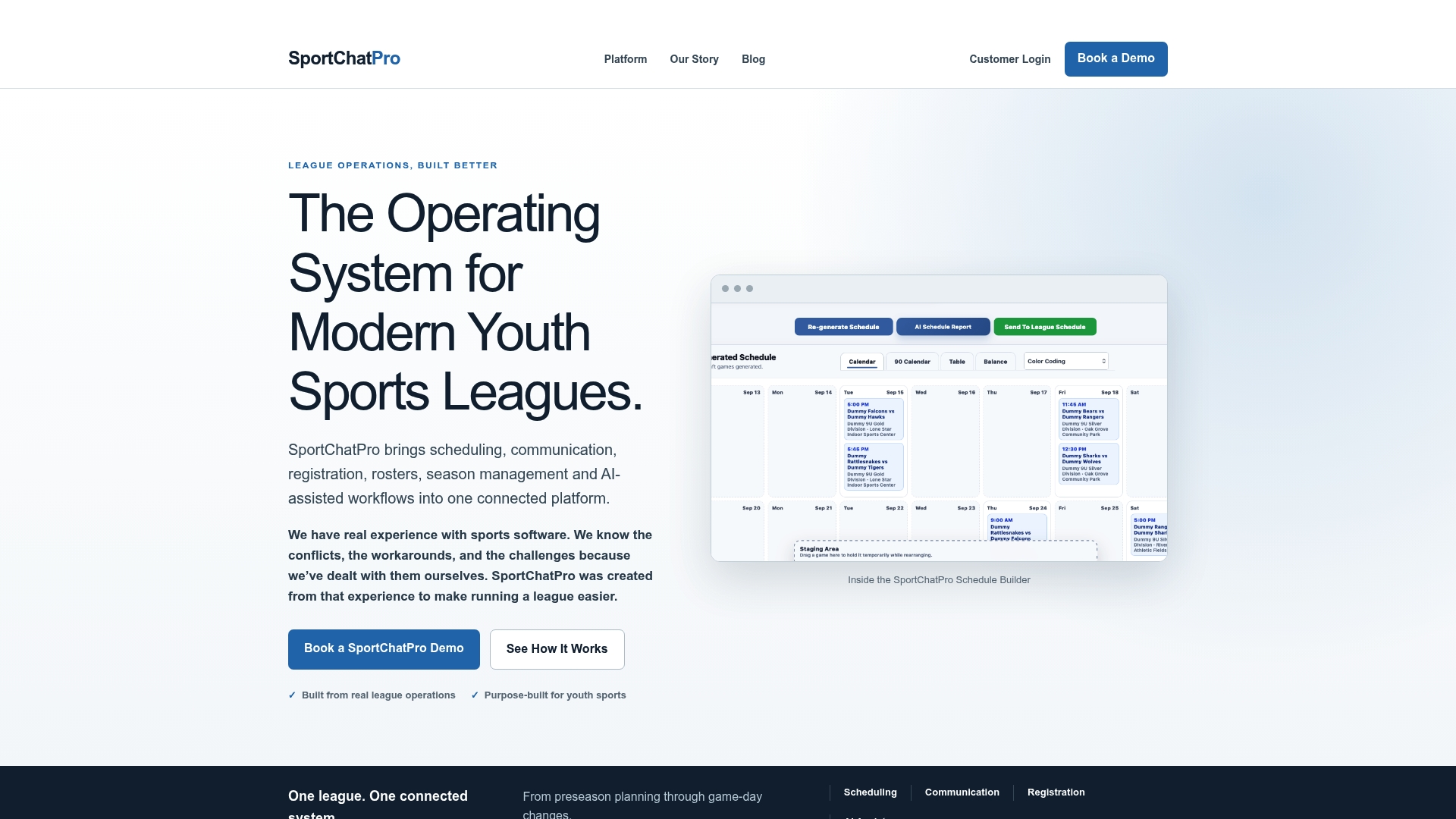
- Centralized contact lists stay current automatically as rosters change.
- Pre-saved alert templates mean no one is typing a message mid-emergency.
- Venue and facility details carry over from season to season instead of starting over each year.
If your league is still piecing together alerts from a phone tree and a shared spreadsheet, take a look at the SportChatPro platform and see how an integrated system handles scheduling and emergency communication together.
FAQ
Who should be allowed to send an emergency alert for a league?
A single Authorized Decision-Maker should hold unchallengeable authority to trigger an alert, supported by a Weather Safety Official who monitors conditions. NFHS guidance recommends this structure specifically so decisions aren’t delayed by debate during an active threat.
How long should play be suspended after lightning is detected?
The standard threshold is to suspend play when thunder is heard or lightning is detected within about six miles, then wait a full 30 minutes after the last thunder or flash before resuming, according to NOAA’s lightning safety guidance. Always check whether your governing body sets a stricter local rule.
What should be in a venue-specific Emergency Action Plan?
At minimum, an EAP needs EMS contact numbers, a venue map with the exact shelter or meeting point, the location of equipment like AEDs, assigned roles for who does what, and a documentation template, per NATA’s EAP guidance. It should be posted at the venue, not just filed away.
How often should a league test its emergency alert system?
Run daily readiness checks on communication tools and AEDs, a quarterly simulated alert test across every channel, and a full annual EAP drill, ideally involving local EMS. Testing on this schedule catches channel failures and gaps before a real incident does.
Can a platform like SportChatPro help manage emergency alerts for a league?
Yes. We designed SportChatPro to centralize contact lists, venue details, and pre-saved alert templates in one system, so administrators can send a prioritized alert without rebuilding contact information each season.