7 Preseason Operations League Administrators Must Finish
7 Preseason Operations League Administrators Must Finish
Before a single practice starts, league administrators need to close out five to seven operational pillars: governance and board roles, volunteer and safeguarding compliance, registration setup, facilities and insurance, scheduling, budget, and season-to-season continuity. Every one of these should be finished, not just started, before season activity begins. The sections below break each pillar into task-level checklists with owners and timelines.
TL;DR:
- Most leagues should complete governance, safeguarding, registration, facilities, scheduling, and finance tasks before the season begins to avoid last-minute scrambling.
- Registration should follow a phased campaign with promotion eight weeks out, early-bird incentives six weeks early, and deadlines two to four weeks before kickoff.
- Background checks and safeguarding training for volunteers must be completed early, ideally alongside registration promotion, to prevent delays in roster formation.
- Facility reservations and insurance verification need to be confirmed together, with clear conflict-resolution policies in place before scheduling practices and games.
- Conduct an end-of-season data audit to archive records and update contacts, ensuring a smooth transition into the next season and avoiding data hygiene issues.
Table of Contents
- Prioritized Pre-Season Checklist by Operational Pillar
- Registration Setup, Timeline, and Registration Day Logistics
- Volunteer Management and Safeguarding Compliance
- Facilities, Insurance, and Scheduling Basics
- Season-to-Season Continuity and Data Hygiene
- What I Learned Moving Off Spreadsheets
- Where SportChatPro Fits Into Your Pre-Season Checklist
- Sources
- FAQ
Prioritized Pre-Season Checklist by Operational Pillar
Most leagues run into trouble not because they skip tasks, but because they tackle them in the wrong order. Governance and safeguarding have to come first because everything else, registration, scheduling, communications, depends on having cleared people and defined roles in place.
Work through the pillars in this order:
- Governance: confirm board roles are filled, close out any pending elections or annual meetings, and update contact records for every officer.
- Volunteer and safeguarding: complete background checks and abuse-awareness training for anyone with athlete contact, name a safeguarding lead, and centralize the records in one tracker.
- Registration and roster formation: open registration in phases, collect required documents up front, and set firm deadlines with early-bird incentives to drive early sign-ups.
- Facilities and insurance: confirm field or gym reservations, permits, and certificates of insurance, and keep facility contact information on hand for emergencies.
- Scheduling: block out practice and game time, check for conflicts across teams and venues, and reserve fields for playoffs before the regular season even starts.
- Finance: finalize the season budget and confirm that payment processing for registration fees is tested and working.
- Communications: schedule parent meetings and send pre-season notices covering dates, fees, and expectations.
The Little League Season Prep Checklist frames these same five areas, governance, volunteer screening, facilities and insurance, registration timelines, and bylaws review, as the core of an effective pre-season plan. Bylaws review deserves its own line item here: outdated language on age cutoffs, transfer rules, or disciplinary procedures creates disputes mid-season that are far more costly to resolve than a one-hour board review in the off-season.
Treat this list as sequential rather than parallel where possible. A league that opens registration before background checks are underway often ends up scrambling to clear volunteers after rosters are already forming, which is the exact bottleneck the next two sections are built to prevent.
Registration Setup, Timeline, and Registration Day Logistics
Registration works best as a campaign, not a form you switch on. The Little League registration checklist lays out the same phased approach that most local leagues rely on: promotion, structured registration windows, and clear documentation requirements.
- Pre-open promotion (8 to 12 weeks out): announce dates, fees, and any rule changes through your usual communication channels.
- Early-bird window (6 to 8 weeks out): offer a discount or priority placement to encourage early sign-ups and give roster planning a head start.
- Final deadline (2 to 4 weeks out): close standard registration and shift to a waitlist or late-fee process.
- Roster cutoff: lock the data feeding team formation so coaches and schedulers work from a stable list.
Every registration form should collect birth certificates or proof of age, residency documentation where required, medical release forms, and signed waivers, verified before a player is added to a roster. On-site registration days need clearly marked stations by age division, a working payment terminal, a document scanner or copier, and volunteers assigned to specific shifts and signage duties so families aren’t guessing where to go.
Pro Tip: Feed registration data directly into your roster and scheduling tools instead of re-entering it, so team formation and field assignments start the moment registration closes.

Volunteer Management and Safeguarding Compliance
No one should be on a field with athletes before the paperwork clears. The NSPCC guidance on safe sport events calls for a written safeguarding plan, recruitment guidelines, a code of conduct, and a designated safeguarding lead with published reporting procedures, all in place before activities start.
- Complete background checks and abuse-awareness training for every volunteer with athlete contact.
- Write role descriptions so volunteers know their scope and boundaries before they start.
- Hold an induction briefing that covers the code of conduct and reporting procedures ahead of the first activity.
- Keep one centralized tracker for check completions and training renewals, and block roster assignment until both are marked complete.
Name a safeguarding lead early and publish how to reach them alongside your other pre-season notices. This person owns incident reports and should be someone parents and coaches both know how to contact without digging through a handbook.
Pro Tip: Start background checks and training at the same time you open registration promotion, not when rosters are due. Volunteer clearance almost always takes longer than administrators expect.
Facilities, Insurance, and Scheduling Basics
Facility and insurance confirmations belong on the same checklist item, since a signed reservation without proof of coverage isn’t actually secured.
- Confirm reservation contracts and permits directly with the facility, including lighting availability and accessibility needs.
- Verify the certificate of insurance, its coverage dates, and which incidents fall under the league’s policy versus the venue’s.
- Keep emergency contact information for each facility on file and accessible to coaches, not just administrators.
- Use conflict-aware scheduling that builds in buffer time for warm-ups and accounts for shared fields across age divisions.
- Set a transparent policy for resolving competing requests between historical allocations and new team needs, published before scheduling begins.
A documented field map with priority rules spelled out saves administrators from relitigating the same disputes every time two teams want the same slot.
Season-to-Season Continuity and Data Hygiene
Continuity work happens in the off-season or it doesn’t happen at all. Run an end-of-season audit that archives inactive accounts, removes duplicate contacts, and updates your facility inventory and board contact list.
Export and back up rosters, financial records, and incident logs before the season closes, not months later when someone needs a record that no longer exists. Assign a specific owner and a deadline for this audit so it happens during the off-season instead of getting rushed at kickoff.
Pro Tip: Put the continuity audit on the calendar the same week the season ends, while the roster and records are still fresh in everyone’s memory.

What I Learned Moving Off Spreadsheets
Switching from spreadsheets to one connected system cut hours off every pre-season cycle I ran. The lesson that stuck: safeguarding and volunteer clearance are not tasks to get to later, they’re the gate everything else waits behind.
— Cameron
Where SportChatPro Fits Into Your Pre-Season Checklist
Running this checklist across spreadsheets, email threads, and separate registration tools is where most leagues lose time. SportChatPro connects scheduling, communication, registration, and season management into one system built from real league operations experience.
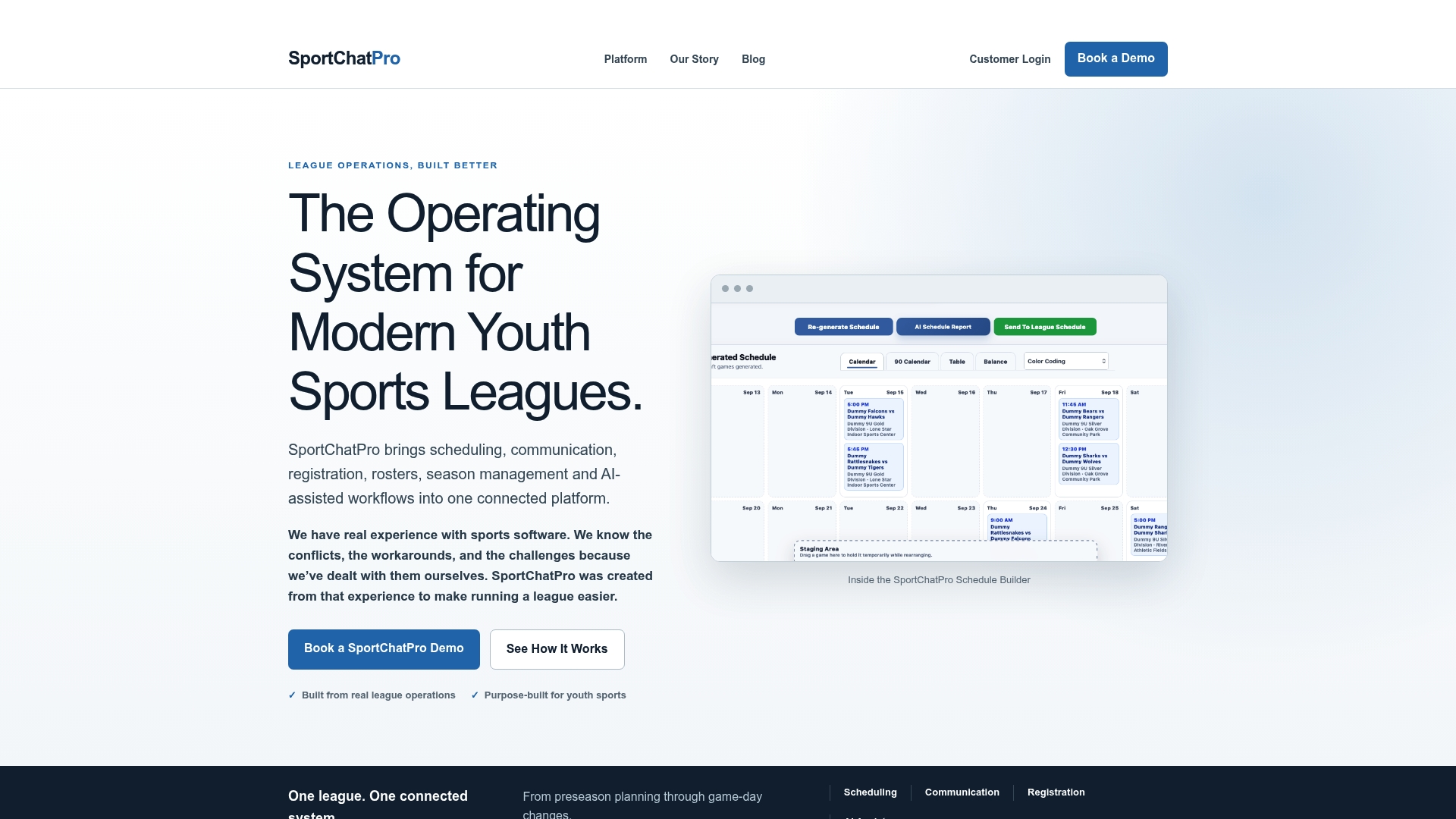
- Scheduling that considers team needs and facility availability to help identify potential field conflicts before they become disputes.
- Registration data integrates with roster and scheduling tools to reduce the need for manual data entry.
- Tools to support season-to-season continuity by carrying forward rosters, contacts, and facility records, helping to reduce audit workload.
If your league is still stitching together spreadsheets and separate registration forms the way Stack Sports describes as common administrative burnout, a consolidated system is worth a look. Visit the SportChatPro platform page to see a demo or start a trial.
Sources
FAQ
What Should Be on a Pre-Season Checklist for Leagues?
A pre-season checklist should cover governance and board roles, volunteer background checks and safeguarding training, registration setup, facility and insurance confirmation, scheduling, budget review, and season continuity tasks. Each pillar should be complete, not just started, before the first practice.
When Should Leagues Start Registration Before the Season?
Leagues typically start promoting registration 8 to 12 weeks before the season, open an early-bird window 6 to 8 weeks out, and close standard registration 2 to 4 weeks before kickoff. This phased timeline gives facilities, volunteer checks, and roster formation enough lead time to finish properly.
Who Should Be Responsible for Safeguarding Compliance?
Leagues should designate a specific safeguarding lead responsible for tracking background checks, training completion, and incident reports. The NSPCC’s safe sport guidance recommends this role be named and published before any season activity begins.
How Do Leagues Keep Data Clean Between Seasons?
Leagues should run an end-of-season audit that archives inactive accounts, removes duplicate contacts, and updates facility and board records. Doing this work during the off-season, rather than at kickoff, prevents the data problems that slow down next season’s registration and scheduling.
Can a Single Platform Replace Spreadsheets for League Management?
Yes, platforms built specifically for league operations, such as SportChatPro, connect registration, scheduling, and communication so administrators aren’t managing separate spreadsheets and tools. This kind of consolidation is a common recommendation for reducing the administrative burden that leads to volunteer burnout.